
Just Listed: A $166,000+ Income-Producing Real Estate Portfolio in Downtown Savannah, Georgia
Six rental units. Extensive renovations. More than $166,000 in reported annual rental income. One exceptional opportunity in the heart of Savannah.
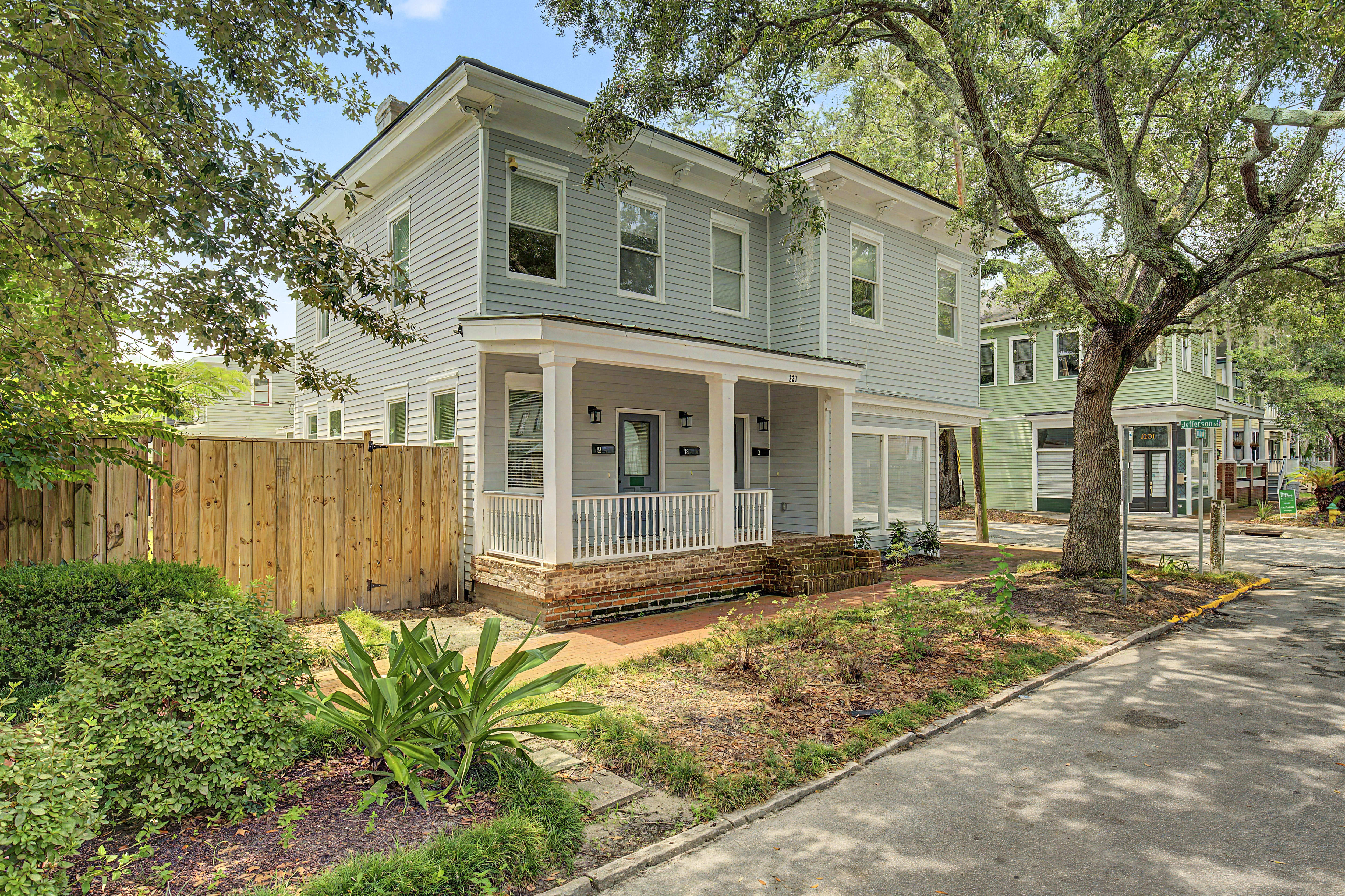
For investors searching for a renovated multifamily investment property in Savannah, Georgia, 221 W. Duffy Street and 1210 Jefferson Street present a compelling opportunity to acquire an established income-producing real estate portfolio in one of the city's most recognizable historic neighborhoods.
Offered at $1,750,000, this investment portfolio combines a five-unit multifamily property at 221 W. Duffy Street with a separate two-bedroom single-family residence at 1210 Jefferson Street. Together, the properties offer six residential units and more than $166,000 in reported annual rental income.
The properties have undergone extensive renovations, including improvements to kitchens, bathrooms, laundry areas, HVAC systems, water heaters, siding, roofing, plumbing, and electrical systems. For an investor seeking multiple income streams without taking on the same scope of renovation work from the beginning, this offering deserves a closer look.
Located near Forsyth Park and the dining, shopping, architecture, and cultural attractions that define downtown Savannah, the portfolio combines rental income, multiple units, and a highly recognizable location in Savannah's historic urban core.
Listed by Golden Homes Real Estate Group, part of RE/MAX Island Realty.
Property Highlights: 221 W. Duffy Street and 1210 Jefferson Street
List price: $1,750,000
Location: Downtown Savannah, Georgia
Properties included: 221 W. Duffy Street and 1210 Jefferson Street
Total residential units: 6
Reported annual rental income: More than $166,000
Property configuration: Five-unit multifamily property plus a separate two-bedroom single-family residence
Renovations: Extensive interior, mechanical, plumbing, electrical, roofing, and exterior improvements
Location advantage: Near Forsyth Park and Savannah's historic downtown attractions
Investment profile: Income-producing multifamily real estate with potential for continued portfolio ownership and operational optimization
Actual income, expenses, occupancy, lease terms, and property-specific operating records should be reviewed during due diligence. Rental income is not guaranteed.
A Rare Opportunity to Acquire Six Income-Producing Units in Savannah
One of the most attractive aspects of this offering is its scale. Rather than purchasing a single rental home and relying on one tenant or one lease, an investor acquires a portfolio consisting of multiple units across two properties.
The five-unit multifamily building at 221 W. Duffy Street provides the foundation of the portfolio, while the additional residence at 1210 Jefferson Street adds another distinct rental asset.
This structure offers several potential advantages for an investor:
Multiple income streams. With six residential units, rental income can be generated across multiple leases. If one unit becomes vacant, the remaining occupied units may continue producing income, although the overall effect depends on each unit's rent and operating expenses.
Diversified rental exposure. Different unit sizes and a separate single-family residence can appeal to different tenant profiles. Depending on the existing leases and local demand, the properties may serve traditional residential tenants, furnished-rental occupants, or other eligible rental arrangements.
Operational scale. Managing several units within a concentrated geographic area can create opportunities to streamline maintenance, vendor relationships, leasing, and property oversight.
Potential for long-term portfolio growth. An investor may be able to improve performance over time through thoughtful management, market-supported rent adjustments, expense control, and capital planning.
For investors evaluating multifamily real estate in Savannah, the opportunity is not simply to purchase additional doors. It is to acquire a group of income-producing assets with the potential to be operated as a coordinated investment portfolio.
More Than $166,000 in Reported Annual Rental Income
The portfolio is being marketed with more than $166,000 in annual rental income, making its existing income profile one of the central attractions for prospective buyers.
At that reported income level, the portfolio provides an initial framework for evaluating its investment potential.
What does $166,000 in annual rental income mean?
Using $166,000 as a conservative reference point for the reported annual figure:
Annual rental income: $166,000
Average monthly rental income: Approximately $13,833
Average annual income per unit: Approximately $27,667
Average monthly income per unit: Approximately $2,306
These per-unit figures are simple portfolio averages, not estimates of the actual rent for each unit. Actual rents can differ significantly by unit size, lease structure, condition, and use.
The distinction between gross rental income and net operating income is especially important for multifamily investors. Gross income does not account for property taxes, insurance, repairs, utilities paid by the owner, management, turnover, vacancy, reserves, or other operating costs.
A thorough acquisition analysis should therefore examine the rent roll, signed leases, historical collections, utility responsibilities, maintenance records, insurance quotations, property tax information, and other operating statements.
Understanding the potential capitalization rate
Investors frequently evaluate income-producing properties using the capitalization rate, or cap rate. This metric compares a property's net operating income with its purchase price.
At the current asking price of $1,750,000, the portfolio's gross rental income represents approximately 9.49% of the asking price. However, this is a gross-income-to-price ratio, not the property's cap rate.
The actual cap rate cannot be calculated from gross rental income alone. It requires a reliable net operating income figure after normal operating expenses and before debt service and income taxes.
For example, if a buyer's verified financial analysis establishes a particular level of annual net operating income, that amount can be divided by the acquisition price to calculate the property's indicated cap rate. Buyers should use the actual financial records rather than assume a cap rate based on advertised gross income.
This is precisely why the opportunity merits detailed underwriting: the reported income provides a starting point, while the verified expense structure and net operating income determine the property's true investment performance.
Extensive Renovations Help Address Major Ownership Considerations
Renovation scope is a significant factor when comparing multifamily properties. A building with deferred maintenance may require substantial additional capital after closing, potentially reducing cash flow and increasing the total cost of ownership.
The 221 W. Duffy Street and 1210 Jefferson Street portfolio has undergone extensive improvements, including:
Full interior renovations, including kitchens, bathrooms, and laundry areas
New HVAC systems
New hot-water heaters
New roof
New siding
Plumbing improvements
Electrical improvements
These improvements are important because they address multiple components of a property's physical condition, including interior finishes, mechanical systems, and major building elements.
Updated kitchens and bathrooms can help a property appeal to prospective tenants. In-unit or dedicated laundry facilities, where provided, can also improve convenience. Updated HVAC systems and water heaters may help reduce the risk of certain near-term replacement expenses compared with properties whose systems are approaching the end of their useful lives.
A renovated property is not maintenance-free, and investors should not assume that every component is new or that future capital expenditures will be eliminated. Buyers should verify the scope and dates of the improvements, request available permits and invoices, and conduct appropriate inspections.
Nevertheless, the work already completed can be a meaningful advantage for buyers who want to focus on operating and optimizing an income-producing asset rather than starting with a major renovation project.
Why Location Matters: Investing Near Forsyth Park in Savannah
Real estate investment performance is influenced by more than the building itself. Location affects the potential tenant pool, leasing strategy, marketability, and long-term appeal of the asset.
The Duffy Street and Jefferson Street properties are positioned near Forsyth Park, one of Savannah's best-known public spaces and a defining feature of its historic urban landscape.
The surrounding downtown area offers access to Savannah's historic streets, restaurants, local businesses, cultural destinations, and established residential neighborhoods. This location can appeal to tenants who value proximity to the city's employment, education, dining, and recreational opportunities.
For a rental-property investor, the appeal of this location is its potential to serve multiple segments of the residential market. The appropriate strategy depends on the individual unit, its layout and condition, the existing lease, the target tenant, and the applicable rules governing the property's use.
Savannah's visitor economy adds important market context
Savannah's visitor economy is a significant part of the regional economic landscape. According to the Savannah Area Chamber of Commerce, the Savannah and Chatham County area welcomed approximately 12.9 million visitors and generated $4.1 billion in visitor spending in 2025. The reported economic impact reinforces the importance of tourism and hospitality to the local economy.
Source: Savannah Area Chamber of Commerce — Tourism and Visitor Economy.
Tourism activity can contribute to demand for lodging, restaurants, retail, and related services, but it does not guarantee the performance of any individual rental property. Investors should evaluate the existing income and the legal rental options available to each unit rather than assume that visitor growth automatically translates into higher returns.
Could This Portfolio Work as a Long-Term Rental Investment?
Traditional residential leasing is one potential strategy for a multifamily portfolio of this type. Long-term rentals can provide recurring income through leases that are generally less dependent on nightly booking patterns than vacation rentals.
The portfolio's multiple units create the opportunity to evaluate different rental arrangements while maintaining a focus on consistent operations and tenant retention.
An investor assessing a long-term rental strategy should consider:
Existing leases and rent levels. Determine which units are occupied, the amount of rent actually collected, lease expiration dates, security deposits, concessions, and any outstanding tenant obligations.
Market-supported rents. Compare each unit with relevant rentals of similar size, condition, and location. Do not assume all units can achieve the same rent or that every existing lease can be adjusted immediately.
Operating expenses. Review taxes, insurance, utilities, maintenance, management, landscaping, pest control, common-area costs, and any services paid by the owner.
Vacancy and turnover. Budget for periods between tenants, cleaning, repairs, leasing costs, and other expenses that can interrupt collections.
Capital reserves. Even renovated properties require periodic maintenance and eventual replacement of building components.
A careful long-term rental analysis can help a buyer determine whether the portfolio's existing income provides an attractive foundation for continued ownership.
What About Furnished Rentals or Short-Term Vacation Rentals?
Savannah is a destination city with an established visitor economy, so some investors may also consider furnished housing or short-term vacation rental strategies. However, the legal status of a property is a critical part of that analysis.
The City of Savannah regulates short-term vacation rentals, generally defining them as residential accommodations rented to transient guests for periods of 30 consecutive days or less. Operating legally requires the appropriate city approvals and certificates. The city's rules also include a short-term vacation rental overlay district and additional restrictions that can apply to residential properties in certain areas.
Official resources:
The city notes that new short-term vacation rental applications are subject to zoning and ordinance requirements, and some residential areas are subject to a per-ward cap. A property's proximity to downtown attractions does not, by itself, establish that it qualifies for short-term rental use.
Before underwriting a vacation-rental strategy, buyers should verify the zoning and permitted use for each relevant parcel and unit, any existing certificates, the status of those approvals after a sale, and any applicable occupancy, parking, insurance, and business-tax requirements.
For this portfolio, short-term rental revenue should not be assumed unless the relevant use is confirmed to be permitted and the buyer has independently evaluated its operating costs and likely performance.
A buyer may find that traditional leasing, furnished mid-term rentals, or another lawful rental model is more appropriate. The best strategy will depend on the verified property facts and the investor's objectives.
Renovated Real Estate and Potential Tax Planning Opportunities
Another consideration for investors purchasing income-producing real estate is the tax treatment of the acquisition and the property's depreciable components.
Depending on the buyer's circumstances, the property's use, the purchase allocation, and applicable tax law, a qualified tax professional may evaluate depreciation planning or a cost segregation study.
Cost segregation is an accounting and tax-planning approach that examines a property's components to determine whether certain assets qualify for depreciation periods different from those generally applicable to the building itself. It does not automatically make the entire purchase price immediately deductible, and the results depend on the facts and applicable tax rules.
The extensive renovation history may also make it important to understand which improvements were completed, when they were placed in service, how they were paid for, and how they are reflected in the seller's records.
Prospective buyers should consult their own CPA and, where appropriate, a qualified cost segregation specialist before relying on a tax benefit in their acquisition analysis. Tax outcomes vary by taxpayer and transaction, and no specific deduction or tax savings is guaranteed.
How Investors Should Underwrite 221 W. Duffy Street and 1210 Jefferson Street
A six-unit portfolio can be evaluated using several complementary measures. Looking at only the purchase price or gross rent does not tell the entire story.
1. Verify the income
Request the current rent roll, copies of leases, payment history, and supporting records for the reported annual rental income. Clarify whether the advertised amount reflects current contractual rent, actual collected rent, scheduled rent, or another income measure.
2. Establish realistic operating expenses
Review property taxes, insurance, utilities, management fees, maintenance, repairs, turnover costs, and other expenses. Confirm whether utilities are separately metered and which services are paid by tenants versus the owner.
3. Calculate net operating income
Subtract normal operating expenses from effective rental income. Vacancy and collection loss should be accounted for when appropriate. Net operating income provides a more useful basis for comparing income-producing properties than gross rent alone.
4. Evaluate financing and cash flow
If the acquisition will be financed, analyze the down payment, interest rate, loan term, closing costs, lender requirements, and debt service. A property can show positive net operating income and still produce limited or negative cash flow after mortgage payments and additional capital needs.
5. Inspect the completed renovations
Review available permits, contractor invoices, warranties, inspection reports, and the age and condition of major systems. A documented renovation history can help buyers understand both the property's present condition and its future maintenance needs.
6. Model alternative rental strategies carefully
Compare realistic long-term, furnished-rental, or other permitted rental scenarios only after confirming that the intended use is legally available. Each model has different revenue assumptions, expenses, management requirements, vacancy patterns, and regulatory considerations.
7. Plan for ongoing ownership
Include an appropriate reserve for maintenance, unexpected repairs, insurance changes, property-tax changes, and periodic capital improvements. Even a recently renovated investment property should be evaluated over a multiyear holding period.
A disciplined underwriting process allows buyers to assess the opportunity based on verified financial performance rather than relying solely on headline income.
Who Might Be Interested in This Savannah Investment Property?
The portfolio may be worth evaluating for several types of buyers.
Experienced multifamily investors may appreciate the opportunity to acquire several units in one transaction and manage the properties as part of an existing portfolio.
Investors expanding into Savannah may be looking for an established asset in the downtown area rather than purchasing a single rental home or undertaking a full redevelopment project.
Portfolio owners seeking operational scale may find value in the combination of a multifamily building and a separate single-family residence, subject to the details of the leases, operations, and property management structure.
Investors focused on renovation-complete assets may prefer a property with substantial work already completed, while still conducting inspections and reserving funds for future maintenance.
Buyers interested in tax planning may wish to evaluate depreciation and cost segregation with their tax advisors as part of the overall acquisition strategy.
The right buyer will be one whose investment criteria align with the verified income, expenses, property condition, financing terms, and permitted rental uses.
The Bottom Line: A Distinctive Downtown Savannah Investment Opportunity
221 W. Duffy Street and 1210 Jefferson Street offer a combination that is not always easy to find in a single acquisition: six residential rental units, extensive reported renovations, more than $166,000 in annual rental income, and a location near Forsyth Park in downtown Savannah.
At an asking price of $1,750,000, the portfolio deserves a detailed financial review from investors looking for income-producing real estate in Savannah, Georgia.
The most important next step is to evaluate the actual rent roll, operating expenses, net operating income, property condition, and intended rental strategy. Those details will determine whether the portfolio fits an investor's required return and long-term ownership goals.
For buyers seeking a multifamily investment property in Savannah, this is an opportunity to investigate a renovated portfolio with multiple income streams and a recognizable downtown location.
Interested in 221 W. Duffy Street and 1210 Jefferson Street?
Golden Homes Real Estate Team, specializes in helping buyers and investors evaluate real estate opportunities throughout Savannah and the greater Lowcountry.
Whether you are searching for a multifamily investment property, a renovated income-producing asset, or your next addition to a growing real estate portfolio, our team can help you review the opportunity and determine whether it aligns with your investment objectives.
Contact Golden Homes Real Estate Group for additional listing information, financial details, and showing availability.
Investment Disclaimer: Property information and rental income figures are based on listing information and should be independently verified. Rental income, appreciation, expenses, financing terms, tax treatment, and future investment performance are not guaranteed. Buyers should conduct their own due diligence and consult appropriate real estate, legal, accounting, and tax professionals.
Frequently Asked Questions About 221 W. Duffy Street
How much rental income does the portfolio generate?
The property is marketed with more than $166,000 in annual rental income. Buyers should verify the rent roll, lease agreements, collection history, and whether the figure represents actual collected income or scheduled rental income.
How many units are included in the sale?
The offering includes a five-unit multifamily property at 221 W. Duffy Street and a separate two-bedroom single-family residence at 1210 Jefferson Street, for six residential units in total.
What is the asking price?
The current asking price is $1,750,000.
Has the property been renovated?
The listing reports extensive renovations, including kitchens, bathrooms, laundry areas, HVAC systems, water heaters, siding, roofing, plumbing, and electrical improvements. Buyers should verify the scope, timing, permits, and condition of the work.
Is the property suitable for short-term vacation rentals?
That cannot be determined from location or marketing information alone. Savannah regulates short-term vacation rentals through zoning and certification requirements, and buyers must verify eligibility and any applicable existing approvals for the intended use.
Is the property a good investment?
That depends on the buyer's investment criteria and verified financial analysis. The reported income and renovation history provide useful starting points, but a decision should be based on net operating income, expenses, financing, capital reserves, property condition, and the permitted rental strategy.
Who should I contact for more information?
Contact Golden Homes Real Estate Team for additional listing details and showing information!