
Hilton Head Short-Term Rental Moratorium: What Happened at the Meeting, What the Data Shows, and Why It Matters - Your Comprehensive Guide
The Town of Hilton Head Island recently convened council workshops and public hearings about the possibility of a temporary short-term rental (STR) moratorium—a policy that would pause new STR permits while the town studies long-term changes to regulations. The discussion has stirred intense community debate: homeowners, hoteliers, business owners, and city staff are weighing neighborhood quality concerns against the island’s tourism economy and municipal finances.
This article breaks down what happened at the meeting, the key data and staff findings, the likely impacts of a moratorium (both intended and unintended), and why many local leaders and business groups argue that a moratorium would be harmful to Hilton Head Island’s economy and bond-funded priorities.
1) What happened: the old meeting in brief
Town staff and council members held public discussions and closed-door briefings in summer 2025 to evaluate whether a temporary moratorium on new short-term rental permits is an appropriate tool to manage growth and update the Land Management Ordinance (LMO). A staff memo circulated to council outlined how a moratorium could give the town time to roll out a carefully crafted regulatory package while preventing a rush of new STR conversions during the policy design phase. The topic was raised in multiple meetings, including workshops and council sessions in June–August 2025. Island Packet
At several public meetings (including June 3 and later workshops), council voted on budget items, code enforcement enhancements, and initiation of the strategic action plan that specifically lists “assessing a potential moratorium on new short-term rental, timeshare, and major subdivision developments” as a first-year action. The town has also made meeting materials, agendas, and recordings available online for public review. Hilton Head Island
Several news outlets reported council members received confidential legal advice and have since discussed moratorium options behind closed doors, which fueled additional public interest and media coverage in late summer 2025. Island Packet
More information on the most recent meeting on Tuesday, September 16th 2025 Near Bottom of Article with complete Livestream.
What It Would Take to Legally Implement a Short-Term Rental Moratorium in Hilton Head
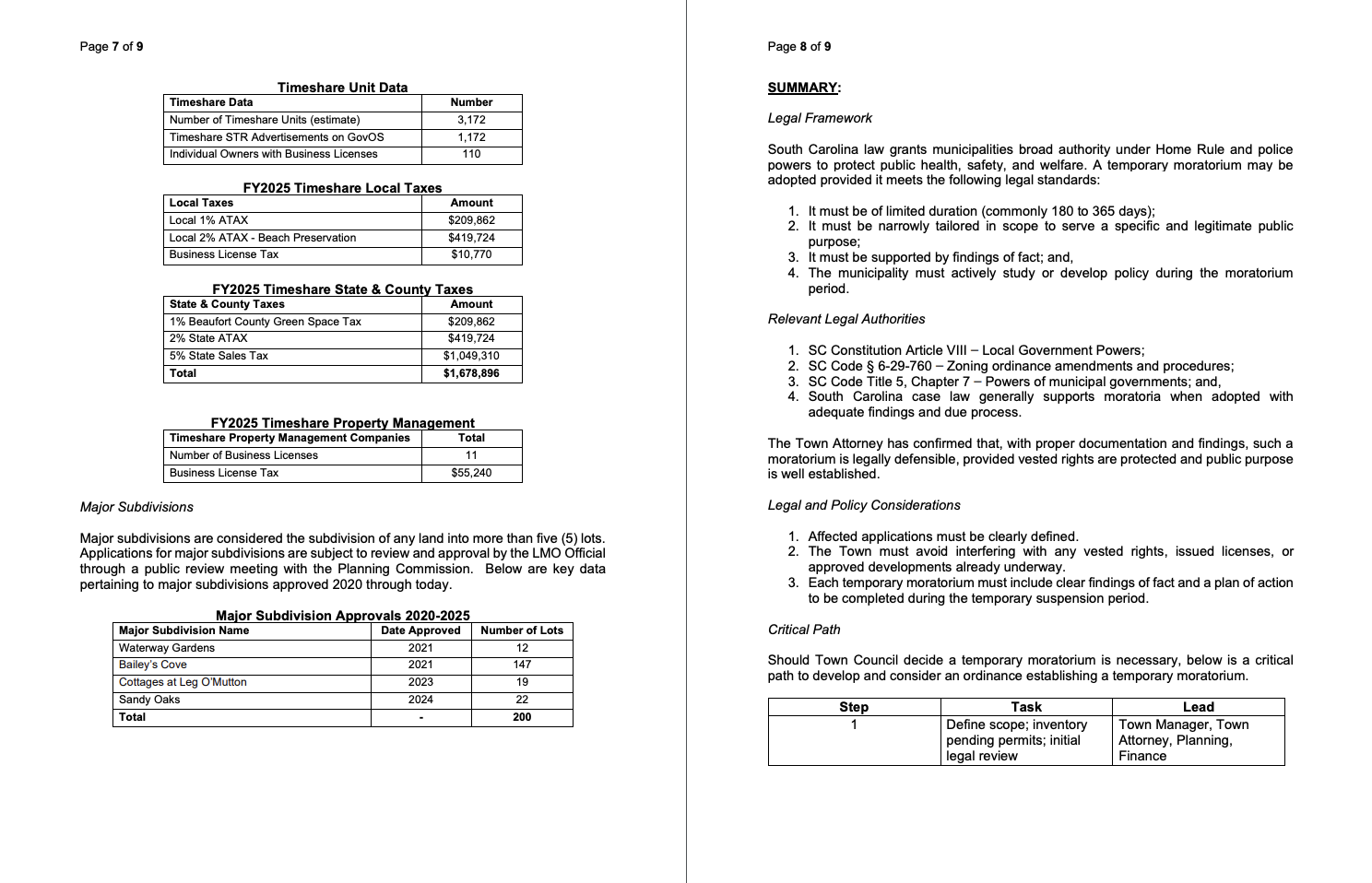
Under South Carolina law, a municipality like Hilton Head cannot simply freeze new short-term rental (STR) applications without meeting a very specific set of legal standards. Courts require that any moratorium be temporary, narrowly tailored, and justified by a clear, documented detriment to public welfare.
To withstand legal scrutiny, the town would need to:
-
Define the exact problem – The council must demonstrate that STRs create a measurable harm to the community. This cannot be vague frustration or anecdotal complaints. Instead, the town must document evidence such as spikes in noise violations, traffic congestion, trash overflow, or measurable impacts on public infrastructure.
-
Identify the culprit – The policy must link the harm directly to STR growth (and not to general tourism or seasonal residents). If, for example, the real culprit is inadequate parking enforcement or lack of trash pickup, a moratorium would likely fail to meet legal standards.
-
Show that a pause is necessary – The town would have to explain why existing tools (like fines, enforcement staff, or zoning updates) are insufficient, and why temporarily halting new STR permits is the only way to protect health, safety, or quality of life while permanent solutions are crafted.
-
Specify a duration and plan of action – By law, a moratorium must include a defined end date (usually 6–12 months) and a clear timeline for fixing the identified problem. The council would need to outline milestones: conducting studies, drafting ordinance updates, holding public hearings, and adopting new rules before the moratorium expires.
-
Avoid overbreadth – Courts typically strike down moratoria that are overly broad. For Hilton Head, this means the town could not freeze all STR activity indefinitely. Instead, it would have to narrowly focus—perhaps only on new permits in specific zoning districts most affected—while allowing compliant existing operators to continue.
In short: For a Hilton Head STR moratorium to be legal, the town must prove that STRs are directly and measurably harming the community, that no other tools can solve the problem, and that the pause will be temporary with a defined fix in place. Otherwise, it risks legal challenge, economic harm, wasted time, and civil lawsuits.
2) The facts & data: STR footprint, enforcement, and complaints
To evaluate the scale of STR operations on Hilton Head, the town and outside analysts have highlighted several key metrics:
-
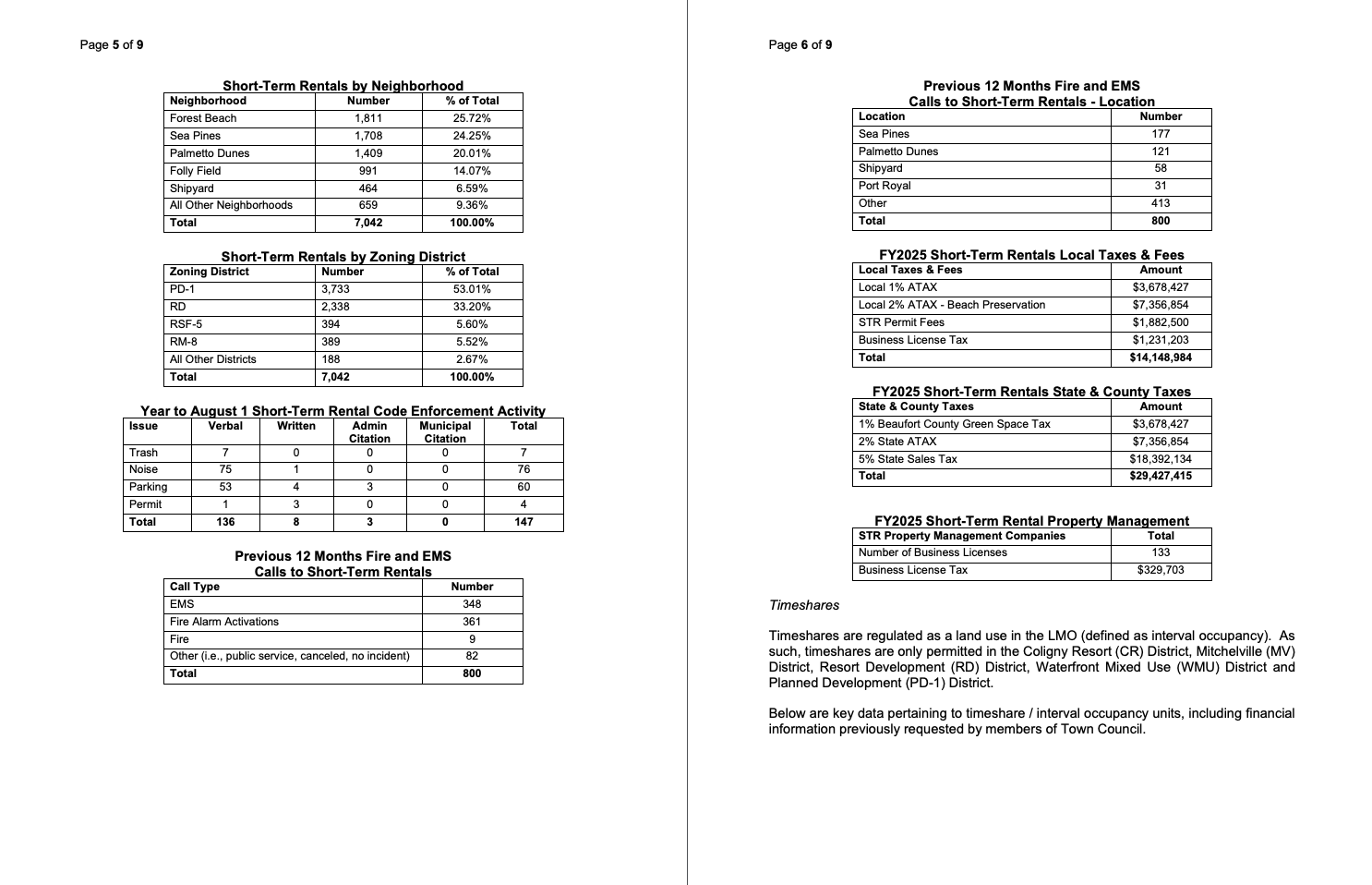
Active STRs: The town estimates thousands of active STR permits. Third-party reports and tax/industry trackers have put the island’s active STR inventory in the multiple thousands (public figures cited by local reporting: approximately 6,600 active short-term rentals). Avalara
-
Complaints & code enforcement: Local reporting and town materials show STR-related complaints include noise, parking, and waste. For example, in 2024 the island recorded dozens of STR complaints (including noise, parking, and trash), which has been used by some council members and residents as a rationale for stronger enforcement or temporary pause. Avalara
-
Fines & enforcement changes: In mid-2025 the town updated its fine structure to allow civil fines (rather than only criminal citations) to enforce STR rules more effectively—first-offense fines for STR violations were adopted in a graduated structure (e.g., $250 first offense, increasing for repeat violations). These changes are part of an effort to make enforcement faster and less costly for the town. Avalara
Those data points are important because they explain why the town is considering additional tools: in short, officials want to protect neighborhood quality and make enforcement more effective while preserving tourism benefits.
3) Why a moratorium is being considered (staff rationale)
Town staff and some council members have framed a moratorium as a temporary, legally defensible tool to:
-
Pause new STR permit approvals so any “rush” of new conversions does not outpace the town’s ability to craft comprehensive rules.
-
Allow time for a careful rewrite of parts of the Land Management Ordinance and other rules to better balance neighborhood livability with economic benefits.
-
Strengthen enforcement mechanisms and update municipal codes (e.g., parking rules, sanitation, noise control, administrative citations) without creating loopholes or pressure caused by immediate permit rushes. Island Packet
Proponents say this “time-out” model has been used elsewhere to give planning staff breathing room to develop rules that are legally defensible and better tailored to the community.
Respective Town of Hilton Head Island Documents:
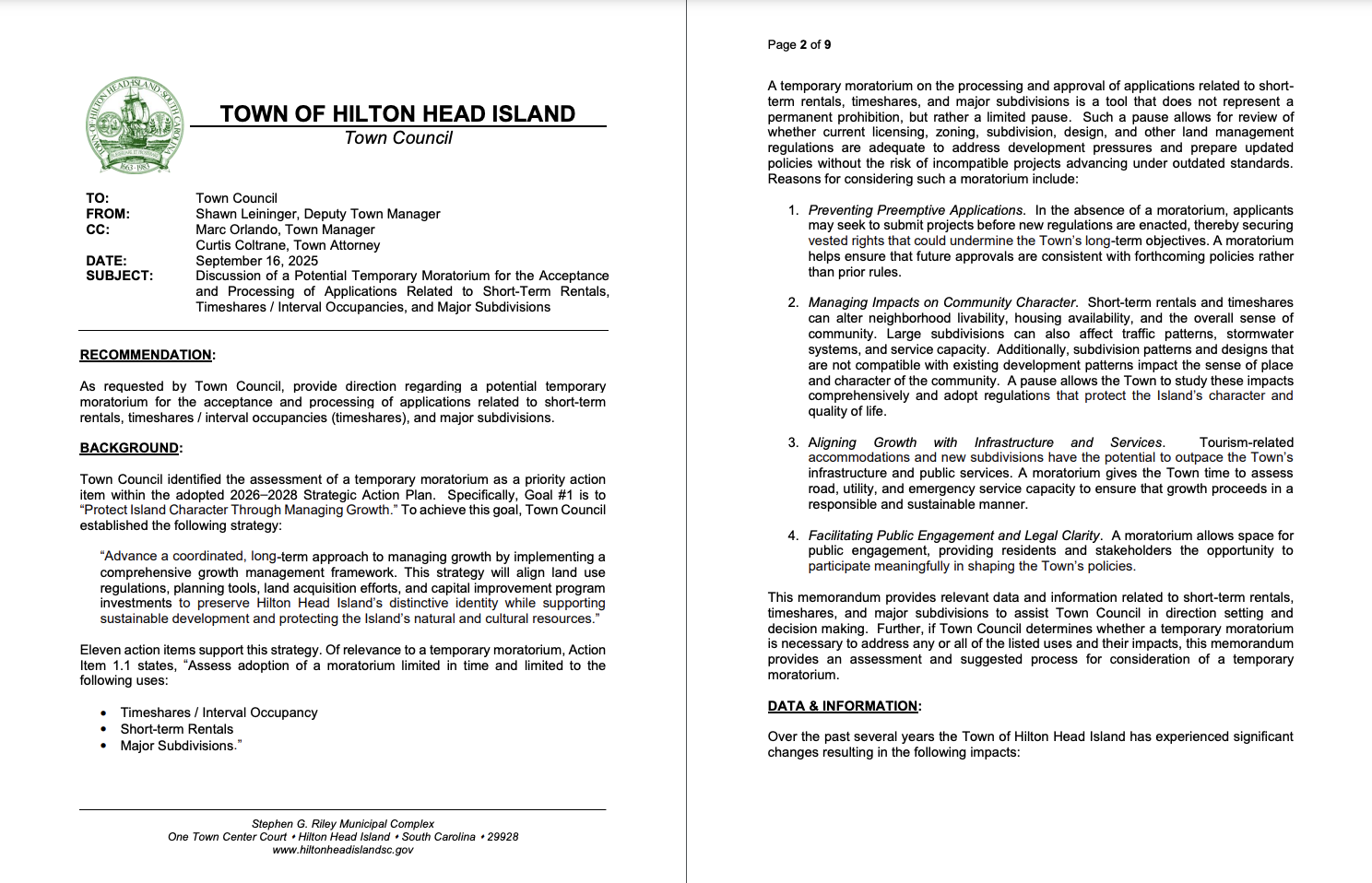
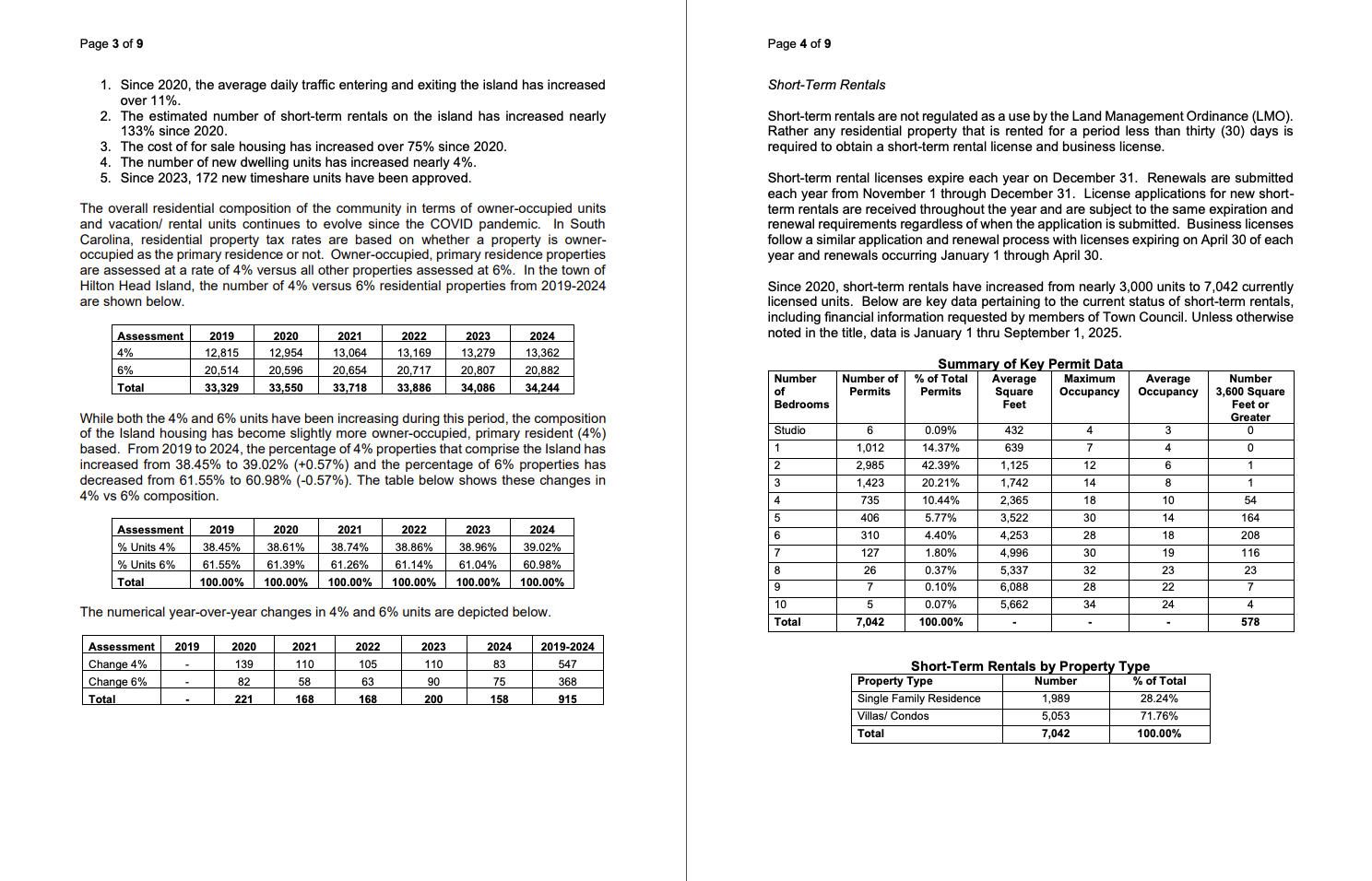
Town of Hilton Head Island Link: https://hiltonheadsc.portal.civicclerk.com/event/655/files/attachment/2482
More information on the most recent meeting on Tuesday ,September 16th 2025 Near Bottom of Article with complete Livestream.
4) The counterarguments: why many believe a moratorium would cause harm
Across various stakeholder groups—hoteliers, property owners, business leaders, and even some municipal finance advocates—there is a common worry: a moratorium could produce significant unintended economic and civic consequences.
Key concerns include:
-
Tourism & lodging tax revenue drop: STRs are a major part of Hilton Head’s visitor economy. Temporarily pausing growth of STRs (or changing their regulatory environment) could reduce available lodging inventory, shift bookings to other destinations, and ultimately reduce lodging tax revenue that supports municipal services and beach maintenance programs. (Lodging taxes are a material revenue stream for the town). Avalara
-
Local business impacts: Less visitor capacity translates to fewer guests at restaurants, retailers, tours, and other local businesses—especially during shoulder season when STRs help smooth demand.
-
Property-owner & investor uncertainty: A moratorium could create market uncertainty that depresses property transactions, slows investment, and hurts homeowners who rely on rental income to offset mortgages.
-
Legal & administrative risk: Temporary moratoria are often scrutinized for legal fairness; the town has been receiving confidential legal counsel on these issues. Improperly framed moratoria risk litigation that can be costly to the municipality. Island Packet
Many business advocates and some council members argue that better enforcement (fines, quick administrative remedies) and targeted zoning changes are preferable to a sweeping moratorium that freezes new supply and could have downstream fiscal impacts. The town’s adoption of new fines and enforcement tools in mid-2025 was one effort to address issues without halting new permits entirely. Avalara
5) What the staff report and local media showed (high-level takeaways)
Local reporting (Island Packet, WHHI, and other outlets) summarized the staff’s perspective: a moratorium can be an effective interim measure if the council needs time to update codes and strengthen enforcement, but it is not a silver bullet. The staff emphasized that any moratorium should be narrowly tailored, temporary, and legally sound, and paired with a clear timeline and community engagement process. Island Packet
Local journalists also highlighted the political sensitivity of the topic—residents seeking quiet neighborhoods are often in direct tension with property owners and businesses that rely on tourism—and reporters covered the closed-door legal briefings that raised community concern about transparency. Island Packet
6) Economic modeling: what investors and the town should consider
If a moratorium were enacted, stakeholders should weigh short- and long-term effects:
A. Near-term impacts
-
Booking displacement: Less inventory → higher nightly rates but potential lost nights as visitors choose other markets.
-
Revenue volatility: Municipal lodging tax receipts could dip, particularly if changes cause multi-year reductions in occupancy.
-
Market reaction: Uncertainty tends to slow transactions—buyers may pause purchases until rules are finalized.
B. Long-term effects
-
Policy-driven scarcity: If the moratorium leads to stricter permanent restrictions, long-run supply could be smaller—and asset values for permitted properties could rise.
-
Investment re-calibration: Investors may shift toward long-term rentals, multifamily, or markets with clearer STR rules.
The most practical path for investors is to model multiple scenarios (base case, moratorium + regulation tightening, and enforcement-only upgrades) and stress test cash flows under each outcome. The town does not want to be overly reliant on litigation-prone moratoria when targeted code fixes and enforcement might address most neighborhood concerns with fewer economic downsides. Avalara
7) Public sentiment & the emerging consensus: strong town bond vs the cost of a moratorium
One theme that emerged from reporting and public statements after the meeting is the perception that Hilton Head Island’s civic and financial “bond”—the community’s reputation, tourism draw, and municipal stability—is a major economic asset. Several local business groups and council members noted that drastic regulatory change (like an open-ended moratorium) could undermine that brand, reduce investor confidence, and slow municipal revenues used for public safety, beach upkeep, and capital projects. Island Packet
That said, many residents stressed the importance of protecting neighborhood livability. The consensus forming in many corners is that stronger enforcement, predictable permitting rules, and well-crafted code updates are preferable to a sweeping moratorium. In other words: the community wants both protection for quality of life and a stable environment for business and investment—not a policy that unintentionally harms either. Island Packet
8) Likely next steps (what to expect)
Based on the staff reports, town agendas, and media coverage, the likely near-term process includes:
-
Further council workshops and public hearings to gather input and legal guidance. (Expect multiple readings and staged adoption if new code is proposed.) hiltonheadsc.portal.civicclerk.com
-
Targeted code changes in the Land Management Ordinance that may address parking, noise, administrative citations, and operational rules for STRs—rather than a indefinite moratorium. Hilton Head Island
-
Increased enforcement and fine collection, as the town has already adopted a graduated fine schedule to streamline penalties against repeat violators. Avalara
-
Transparency & outreach: The town is expected to continue publishing meeting materials and soliciting public input through hearings and online portals. Hilton Head Island
9) Advice for property owners, investors, and visitors
-
For owners: If you operate an STR, confirm your permit is current, maintain compliance with local rules (contact info in property, noise mitigation, trash/parking protocols), and document your operational practices. Consider strengthening your guest screening and house rules to reduce the chance of enforcement action. Hilton Head Island
-
For buyers & investors: Model downside scenarios that include regulatory tightening or temporary permit freezes. If you’re considering a Hilton Head investment, prefer properties with clear compliance and current permitting. Consult local counsel about permit transferability and any pending municipal actions.
-
For residents & community members: Engage in the public process. Attend hearings, review town materials, and submit comments so the council understands neighborhood priorities without compromising the island’s broader economic health. Hilton Head Island
10) Bottom line: balance & cautious policymaking are essential
Hilton Head Island’s conversation about a short-term rental moratorium reflects a real policy challenge: how to protect neighborhood quality while sustaining an economy built on tourism. The town’s staff reports and council workshops suggest a careful, evidence-based approach—one that balances enforcement upgrades, clearer code language, and perhaps short, narrowly tailored temporary measures rather than sweeping, indefinite moratoria. Many community leaders and business stakeholders agree: safeguarding the island’s financial health and civic bond is critical—an overbroad moratorium could do more harm than good if it undermines lodging tax revenue, local businesses, and overall market confidence. Island Packet
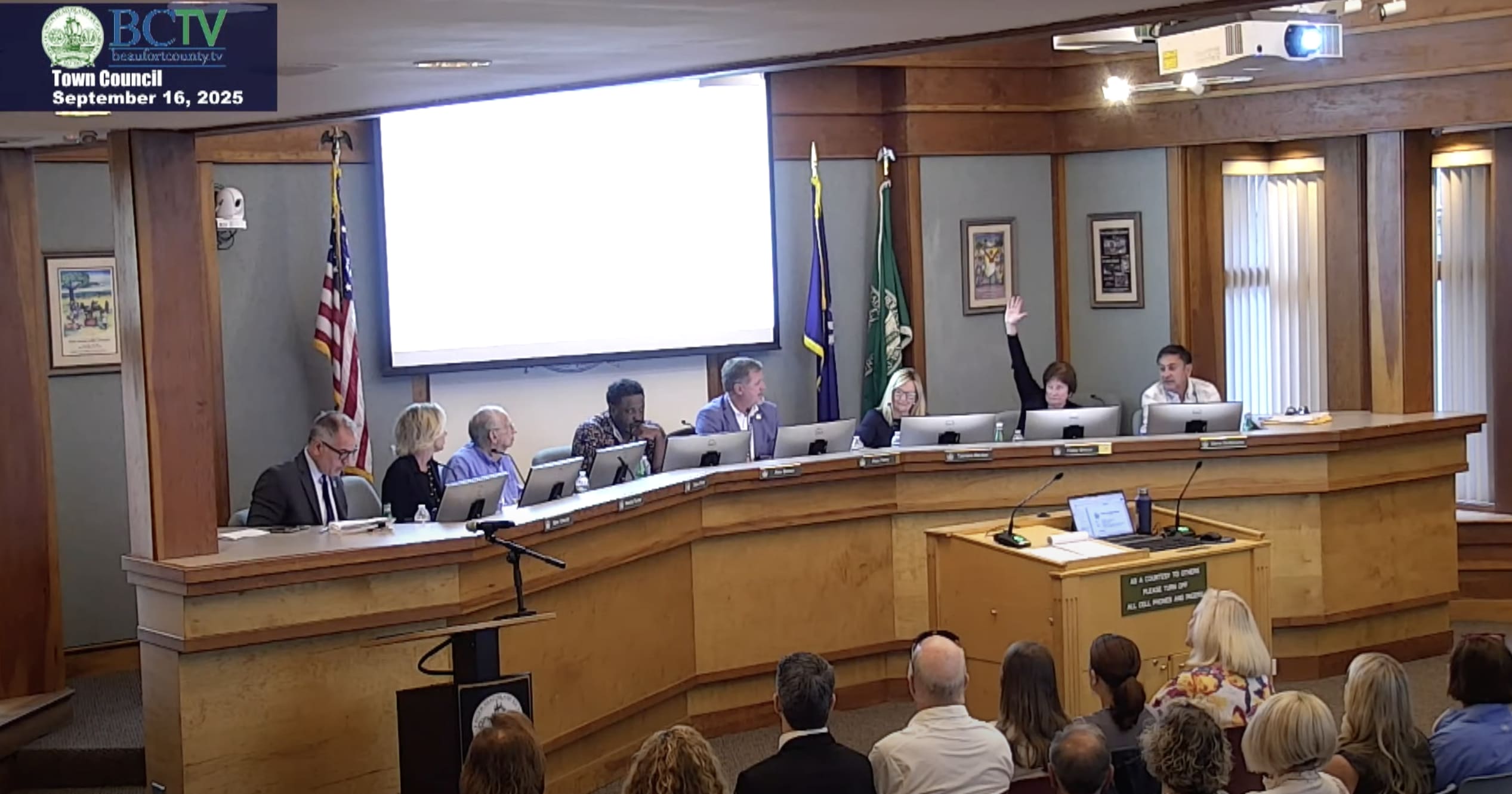
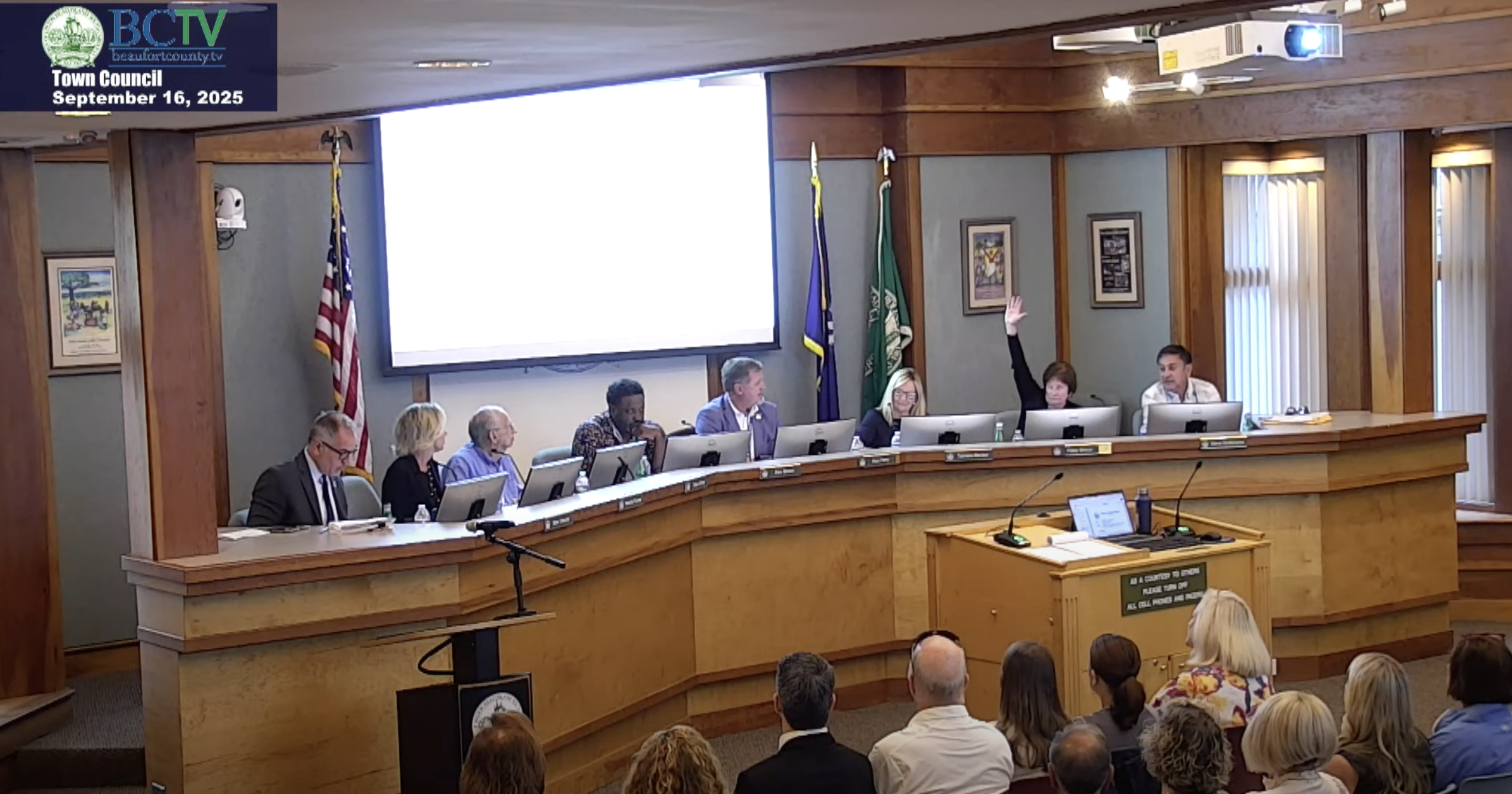
This was the "hand-raising" consensus after the mayor posed the question to council members suggesting "Who wants to see a moratorium on short-term rentals? Do we need to have this discussion?" Minute: 57:45 on Video below at meeting on Tuesday, September 16, 2025
Meeting Minutes and Respective Documents: https://hiltonheadsc.portal.civicclerk.com/event/655/files/attachment/2482
No Clear/Decisive decisions made yet but the outcry for resisting a moratorium is palpable as seen through the above photo and throughout the livestream below.
Important Take Aways from the Hilton Head STR Moratorium Meeting
The discussion around a potential 90-day pause on short-term rental (STR) permits brought out passionate viewpoints and a strong consensus that such a pause may do more harm than good. Here are the key takeaways:
-
A 90-Day Pause = Kicking the Can Down the Road
Many argued that pausing applications would simply delay progress. If the town can study and implement solutions within 90 days, why freeze new STRs in the meantime? Several speakers felt the pause served no functional purpose and would waste valuable time. -
The 21-Person Task Force
The LMO (Land Management Ordinance) review may be handled by a 21-member task force. Critics questioned why additional delays are necessary when this group is fully equipped to study the issue and recommend solutions. -
STRs Are Concentrated, Not Island-Wide
Data shows Hilton Head has 7,042 registered short-term rental units, but they are heavily concentrated on the south end of the island—in communities that thrive on vacation rentals. Entire neighborhoods and communities on the north end of the island have no STR presence at all. -
Public Sentiment Skewed Against a Moratorium
Most speakers at the meeting voiced opposition to the proposed moratorium. The consensus was clear: residents don’t see STRs as destroying Hilton Head, and halting permits would create unnecessary economic and legal fallout. -
Curtis Coltrane Clarified the Legal Bar
Hilton Head’s town attorney, Curtis Coltrane, gave a crucial reminder: a moratorium requires hard evidence that STRs are causing measurable, negative impacts to the community. Without extensive data proving public harm, the town cannot justify a pause. That bar is far from being met. -
Sea Pines Resident Offered Valuable Insight - Mathew Diamond
A full-time resident from Beach Lagoon in Sea Pines, Mathew Diamond, shared his experience, noting that STRs in his neighborhood have not had a negative effect on quality of life. His testimony underscored the idea that short-term rentals can coexist with residential communities without undermining them.
The sentiment from both residents and council members was consistent: Hilton Head Island thrives on tourism, and STRs are not the existential threat some fear. A moratorium would do little beyond stalling momentum.
Sources & further reading
-
Town of Hilton Head Island: Short-Term Rentals page and municipal agendas. Hilton Head Island
-
Island Packet reporting on short-term rental moratorium discussions and council activity. Island Packet
-
Avalara / MyLodgetax summary of updated fine structure and STR complaint statistics for Hilton Head Island. Avalara
-
WHHI local coverage and interviews regarding STR policy and council briefings. YouTube
Watch the full meeting from Tuesday September 16, 2025 here:
⚠️ Disclaimer
This article is for informational purposes only and does not constitute legal, tax, or financial advice. Municipal rules and statutes change frequently; any decisions about property ownership, permitting, or investment should be made in consultation with qualified professionals, including an attorney and a certified public accountant (CPA).
Want more information? Call Chaz. Contact Information below